
Gym marketing ideas at a glance
| Goal | Ideas to prioritise |
|---|---|
| Increase local awareness | Google profile, local SEO, partnerships, events |
| Generate qualified leads | Trials, tours, landing pages, search ads |
| Build trust | Reviews, coach profiles, member stories, walkthrough videos |
| Increase conversion | Clear pricing, fast follow-up, remarketing, FAQs |
| Improve retention | Onboarding, milestone messages, re-engagement, community events |
1. Optimise your Google Business Profile
Complete the gym’s contact details, categories, hours, services and website link. Add new, high-quality photographs that show the facility accurately. Respond to reviews and keep temporary opening changes current.
This is a foundational activity for local discovery, especially when someone searches for a gym nearby. Our Google Business Profile guide for gyms covers each setting in turn.
2. Ask for honest member reviews
Create a simple, repeatable request. Ask after positive moments and send a direct review link. Do not script praise or reward only positive feedback. Respond thoughtfully and look for recurring operational insights.
3. Build a page for each valuable service
Create genuinely useful pages for services such as personal training, strength coaching, group classes or day passes. Explain who each service suits, how it works, where it is offered and how to begin.
See our SEO for gyms guide for local keyword and page-planning advice.
4. Offer a guided first visit
Some prospects want to look around before committing. Offer a bookable tour that includes the training areas, facilities, membership options and opportunity to ask questions. Explain that process on the booking page.
5. Create a beginner programme
Package induction, coaching and early check-ins into a defined beginner journey. Market reassurance and support rather than an extreme transformation. This gives hesitant prospects a clearer reason to act.
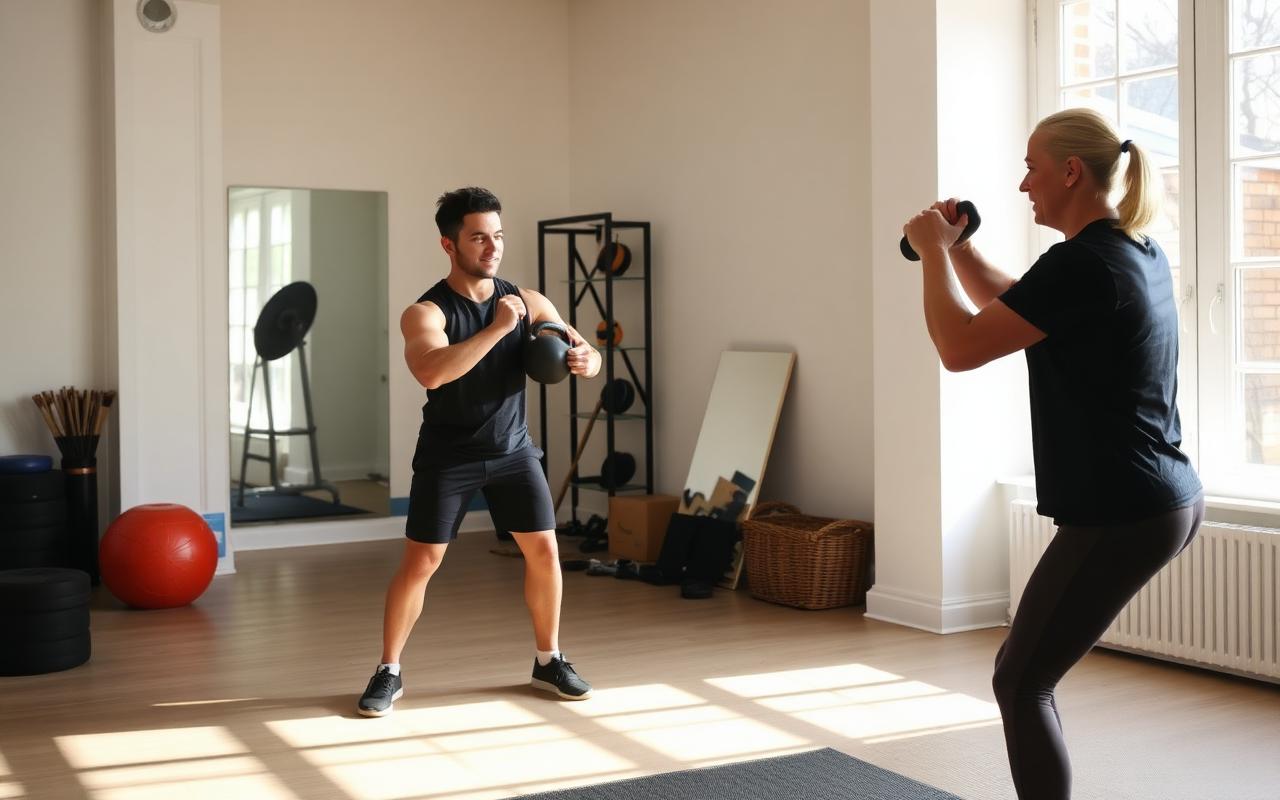
A defined beginner journey gives hesitant prospects a clearer reason to start. 6. Publish a real facility walkthrough
Film a concise tour showing the entrance, reception, training zones, equipment, changing facilities and parking route. Add captions and embed it on the website. A walkthrough reduces uncertainty and lets the atmosphere do some of the selling.
7. Introduce every coach properly
Create useful profiles with a friendly photograph, qualifications, specialisms, coaching approach and the people each coach commonly helps. Avoid generic biographies. Specificity helps prospective members find the right fit.
8. Share detailed member stories
With informed permission, describe the member’s starting point, challenges, experience and outcome. Keep the story realistic and do not imply that everybody will achieve the same result.
9. Run one audience-specific campaign
Target a defined group, such as local beginners, over-50s or strength athletes. Match the advert, landing page and offer. Broad campaigns often produce broad, poorly qualified enquiries.
10. Build dedicated campaign landing pages
Each major campaign deserves a page with one message and one next step. Include benefits, local context, proof, terms, FAQs and a short form. Test it on a phone before spending money. Our guide to gym trial landing pages shows how to structure one.
11. Partner with a physiotherapist or sports therapist
Create something genuinely useful together, such as a workshop on returning to training, a mobility session or a local guide. Define responsibilities and avoid making medical claims outside professional competence.
12. Create a corporate fitness offer
Approach local employers with a clear package rather than a vague discount. It could include employee passes, small-group sessions or a wellbeing workshop. Make administration simple for the employer.
13. Support a local sports club
Offer relevant strength sessions, testing days or educational workshops. Choose a club whose members match your services and establish a long-term relationship rather than placing a logo once.
14. Host a useful open event
Run an event with a specific theme, schedule and capacity: beginner lifting, meet the coaches or an equipment workshop. Capture bookings, send reminders and provide a relevant next step afterward.

Open events work best with a clear theme, schedule and next step. 15. Create a simple referral programme
Explain who qualifies, what both people receive and when rewards are issued. A guest pass or shared account credit may be more relevant than merchandise. Promote referrals during positive member moments.
16. Offer guest passes strategically
Allow members to introduce a friend during quieter sessions or nominated weeks. Require a straightforward registration for safety and follow-up, but avoid turning the visit into a high-pressure sales experience.
17. Celebrate meaningful milestones
Recognise attendance consistency, first events, technique progress and personal bests with permission. This creates community proof without making every story about appearance or weight loss.
18. Answer one common question each week
Turn questions from reception, email and coaching conversations into short videos, posts or website articles. One strong answer can serve several channels, but adapt the format rather than duplicating it mechanically.
19. Publish local fitness guides
Create genuinely local resources: running routes, beginner sports clubs, healthy lunch options near the gym or event preparation tips. Include first-hand detail and update the guide when information changes.
20. Use email to support decisions, not create noise
Build separate sequences for new leads, trial attendees and members. Useful messages include what to expect, coach introductions, booking instructions and common answers. Obtain the appropriate consent and make unsubscribing easy.
21. Follow up missed tours and trials
A missed appointment is not always a lost lead. Send a helpful message with a simple rescheduling link. Keep the tone human and limit the sequence. If few people enquire in the first place, see why a gym website is not generating enquiries.
22. Run a former-member re-engagement campaign
Contact eligible former members with a genuine reason to return, such as new equipment, a different timetable or a restart consultation. Respect marketing preferences and avoid pretending that nothing has changed.
23. Promote quieter training times
If capacity allows, create an off-peak option and show when the gym is calmer. This can attract shift workers, remote workers, older adults and people who prefer less crowded spaces.
24. Use paid search for high-intent local queries
Search ads can reach people already looking for membership or a specific service. Keep location targeting tight, add negative keywords, use relevant landing pages and track attended appointments and memberships.
25. Improve new-member onboarding
Marketing continues after the sale. Create a first-30-day experience with an induction, programme, check-ins and guidance if attendance drops. Stronger retention improves the economics of every acquisition channel.


Many of these ideas depend on a website that turns interest into bookings. Read our guide to gym website design, or talk to us about yours.
Five campaign concepts ready to adapt
The New Starter Programme
Audience: adults who feel unsure about joining a gym.
Offer: an induction, introductory plan and two early check-ins.
Landing-page message: “Start training with a clear plan and a coach who knows your name.”
Strength Foundations
Audience: beginners interested in barbell training.
Offer: a defined series covering safe technique and programming basics.
Landing-page message: “Learn the main lifts in a supportive small group.”
Local Team Training
Audience: sports clubs preparing for a season.
Offer: assessed small-group strength and conditioning.
Landing-page message: “Structured off-field training for local teams.”
Return to Routine
Audience: former members or lapsed exercisers.
Offer: a restart consultation and achievable first-month plan.
Landing-page message: “A sensible way back into consistent training.”
Train Together
Audience: current members and one local friend.
Offer: a scheduled guest session with an optional membership consultation.
Landing-page message: “Bring someone you know and experience the gym together.”
How to choose which ideas to use
Score each idea from one to five for audience fit, cost, staff time, speed to launch and measurability. Begin with one acquisition idea and one retention idea. Define the offer, audience, owner, budget, start date and success metric before launch. For a fuller growth plan, see how to get more gym members.
What should you measure?
Track the full journey:
- Reach within the service area
- Landing-page visits
- Calls, forms and bookings
- Cost per qualified lead
- Tour or trial attendance
- Trial-to-member conversion
- Cost per new member
- Retention at 30, 90 and 180 days
- Revenue and capacity by membership type
Do not judge a campaign solely by social engagement. A small campaign that produces suitable long-term members can outperform a popular post with no measurable action.
Common gym marketing mistakes
- Promoting constant discounts without a positioning strategy
- Sending every campaign to the homepage
- Using only stock photographs
- Hiding important membership information
- Responding slowly to leads
- Tracking form fills but not attended visits or members
- Publishing generic content unrelated to local customers
- Buying fake followers or reviews
- Treating retention as an operations issue only
If your website cannot support these campaigns, our gym website redesign guide explains how to rebuild without losing what already works.
Need a stronger gym website and SEO plan?
Gee Web Design creates conversion-focused websites for UK fitness businesses. See our gym website design service, review pricing or start a conversation.
Ongoing SEO support starts with SEO Growth at £195 per month, including one researched and optimised article each month with keyword research. SEO Growth Plus is £295 per month for a broader monthly programme. Businesses focused on location-based visibility can also explore our local SEO services, and gym website costs explains one-off build pricing separately.
Make your marketing land on a website that converts
Tell us about your gym and the members you want to reach. We'll start with an honest look at your website and enquiry journey.
Frequently asked questions
What is the best marketing idea for a gym?
There is no single best idea. For many local gyms, the strongest starting combination is local search visibility, genuine reviews, a clear introductory offer, a convincing landing page and fast follow-up.
How can I market a gym with a small budget?
Improve the Google Business Profile, request reviews, create authentic phone-shot content, build referral relationships and fix the website journey first. These activities require effort but less media spend.
Do social media ads work for gyms?
They can, especially for audience-specific offers. Performance depends on targeting, creative, landing-page quality, follow-up and measurement through to membership.
Should gyms offer discounts?
Occasional, well-designed offers can help, but constant discounting can weaken perceived value. Added support, a guided start or a relevant package may be more persuasive.
How often should a gym post online?
Choose a sustainable schedule based on quality and purpose. Consistency matters more than publishing several weak posts every day.
How do I know if gym marketing is working?
Connect each source to enquiries, attended trials, memberships and retention. Use tracked forms, call reporting, campaign fields and membership data rather than platform metrics alone.
More guides for gym owners
SEO for Gyms
Build local search visibility with a strong Google profile, useful pages and genuine reviews.
How to Get More Gym Members
A practical growth plan covering your offer, trials, follow-up and retention.
Gym Website Redesign
Rebuild an outdated site without losing search visibility or working links.
Best Gym Management Software UK
Compare eight platforms that handle memberships, bookings and payments.
Ready to plan a new site? Visit our gym website design service page.
Editorial note
Written by Gee Web Design, a UK web design studio focused on health, beauty, fitness and wellness businesses. Last reviewed: . General marketing guidance only; seek professional advice on legal, privacy or advertising obligations.